
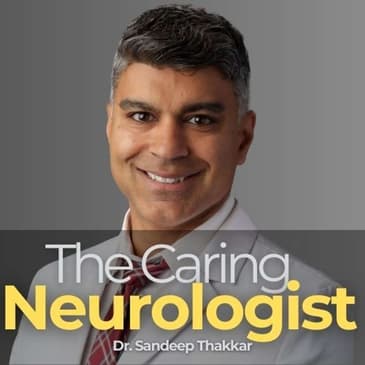
Welcome back to The Caring Neurologist! In this energizing episode, lucky number 13, host Dr. Sandeep Thakkar for a deep dive into one of the hottest topics in Parkinson’s care: movement as medicine. Together, they explore how exercise is not just symptom management, but an active tool in reshaping the progression and daily experience of Parkinson’s disease.
Dr. Thakkar shares the latest research about the brain-boosting powers of movement, from increasing dopamine and neurotrophic factors to helping regulate mood, sleep, and even digestion. Whether you’re newly diagnosed, a caregiver, or just looking to boost your neural health, you’ll come away with practical tips for building a balanced exercise routine tailored to your stage of Parkinson’s and abilities. Plus, you’ll hear real patient stories that prove it’s never too late to get moving, be it through dance, boxing, or even picking up juggling for the first time.
So if you’re curious about whether consistency or intensity matters most, if you want advice on starting safely, or if you’re just seeking a bit of motivation, this episode is packed with insights, humor, and inspiration to help you—and those you love, keep moving forward.
00:00 Healthcare Insights: Focus on Exercise
04:03 Parkinson's: Stretching and Balance Essentials
07:45 Exercise Boosts Brain Health
10:10 Holistic Exercise for Parkinson's Care
12:51 Essential Strength Training with Pilates
17:01 Improving Mobility and Coordination Techniques
21:58 Coordinated Exercise Benefits
23:32 Holistic Exercise for Wellness
26:17 Balanced Daily Exercise Routine
28:59 Parkinson's: High-Intensity Exercise Benefits
34:48 Future Book Plans: Patient Success Stories
38:15 Exercise Revives Sex Life for Seniors
39:02 Maximize Life, Stay Active
Movement as Medicine: Exercise and Parkinson’s - Key Insights from “The Caring Neurologist” Episode 13
In the latest episode of "The Caring Neurologist," host Dr. Sandeep Thakkar to uncover a topic that’s transforming the approach to Parkinson’s care: exercise. Titled "Movement is Medicine," this episode demystifies the vital, life-changing impact that regular movement and tailored exercise can have on people living with Parkinson’s disease and, as Dr. Thakar emphasizes again and again, on all of us. Here are some of the most powerful takeaways from their conversation.
Why Exercise Is a Game-Changer for Parkinson’s
Dr. Thakkar highlights a key shift in our understanding of Parkinson’s: while medications are essential for managing symptoms like tremor or rigidity, they’re not the whole story. “Exercise is a powerful tool for our Parkinson's patients because it continues to offer significant benefits more than just managing its symptoms,” he explains. Physical activity stimulates the brain’s ability to create new connections what he calls “neuroplasticity” and helps keep muscles coordinated and flexible. This can make a big difference not just for motor symptoms but also for non-motor issues like depression, fatigue, constipation, blood pressure regulation, and even sleep quality.
Slowing Progression, Not Just Treating Symptoms
One of the most encouraging points Dr. Thakkar raises is that exercise can actually slow the progression of Parkinson’s not just mask its symptoms. Citing recent research, he explains that aerobic activity boosts blood flow to the brain, stimulates release of crucial peptides like Brain-Derived Neurotrophic Factor (BDNF), and can literally help the brain defend itself against further cell loss. “Research has shown that when we're looking at brain scans of dopamine signals, they've increased in patients who've been exercising regularly,” says Thakkar.
What Type of Exercise Works Best?
Not all exercise is created equal, especially for those with Parkinson’s. Dr. Thakkar recommends a well-rounded program: aerobic exercise to get the heart rate up, strength training to maintain muscle mass, balance and flexibility work (such as yoga, Tai Chi, or dance), and even high-intensity interval training if possible. Activities like Rock Steady Boxing, brisk walking, cycling (including tandem or recumbent cycling), swimming, and strength-building with resistance bands are all useful tools. “You want to stretch multiple times per day. At least five, six times a day if you can!” he encourages.
Safe Starts and Small Steps: Facing the Fear
It’s common for people with Parkinson’s to be afraid of movement especially if balance or fatigue issues make falls more likely. Dr. Thakkar advocates a gradual, individualized approach, starting with chair exercises, using physical or occupational therapists, and incorporating tools like recumbent bikes or even just repeated sit-to-stands and hand-eye coordination drills (like juggling or tossing a ball). He stresses that the fear of falling can easily lead to a cycle of inactivity and worsening symptoms, so breaking through gently but persistently is key.
Personalizing for Every Stage
Exercise isn’t one-size-fits-all. In early Parkinson’s, high-intensity interval training, dancing, rowing, or group classes can be genuinely protective for brain function. In later stages, the focus may shift to seated exercises, gentle stretching, chair boxing, or just working on breathing and mindfulness. Even very small amounts of movement, done safely and consistently, provide tremendous benefit.
Consistency vs. Intensity: Which Matters More?
The age-old debate what’s better, daily gentle activity or infrequent bursts of intensity? Dr. Thakkar’s answer is both: “High intensity offers the greatest neuroprotective feature, while consistency, daily movement, helps manage those symptoms and improves quality of life.” The best approach is to weave manageable, short bouts of movement throughout the day, punctuated by occasional bursts of harder effort.
The Ripple Effect: Caregivers & Real-life Inspiration
Crucially, exercise isn’t just for the person with Parkinson’s caregivers should join in, too. Not only does this prevent burnout and isolation, but it reinforces partnership and shared motivation. Dr. Thakkar shares moving stories: a 70-year-old woman who went from barely able to rise from a chair to skipping rope like a boxer, and a patient who, after diagnosis, set a goal to run a marathon and succeeded.
A Lesson for All of Us
Perhaps the episode’s most important message is universal: don’t wait until a diagnosis to start moving. As Dr. Thakkar says, “We need to start these good habits in our 20s and 30s.” Regardless of age or health status, movement really is medicine.
Ready to make a change? Let this episode be your cue to stretch, walk, or dance starting today.
The Caring Neurologist - Podcast Website - https://thecaringneurologist.com/
Dr. Sandeep Thakkar - LinkedIn - https://www.linkedin.com/in/sandeep-thakkar-do-798a2499/
Dr. Sandeep Thakkar - Clinic - https://ocparkinsons.com/about-mdpds/our-team/dr-thakkar/
TopHealth - https://tophealth.care/